Anna Hoffmann · 2 October 2026
Exploring Layered Textures: Techniques for Achieving Depth in Digital Sculpting Workflows
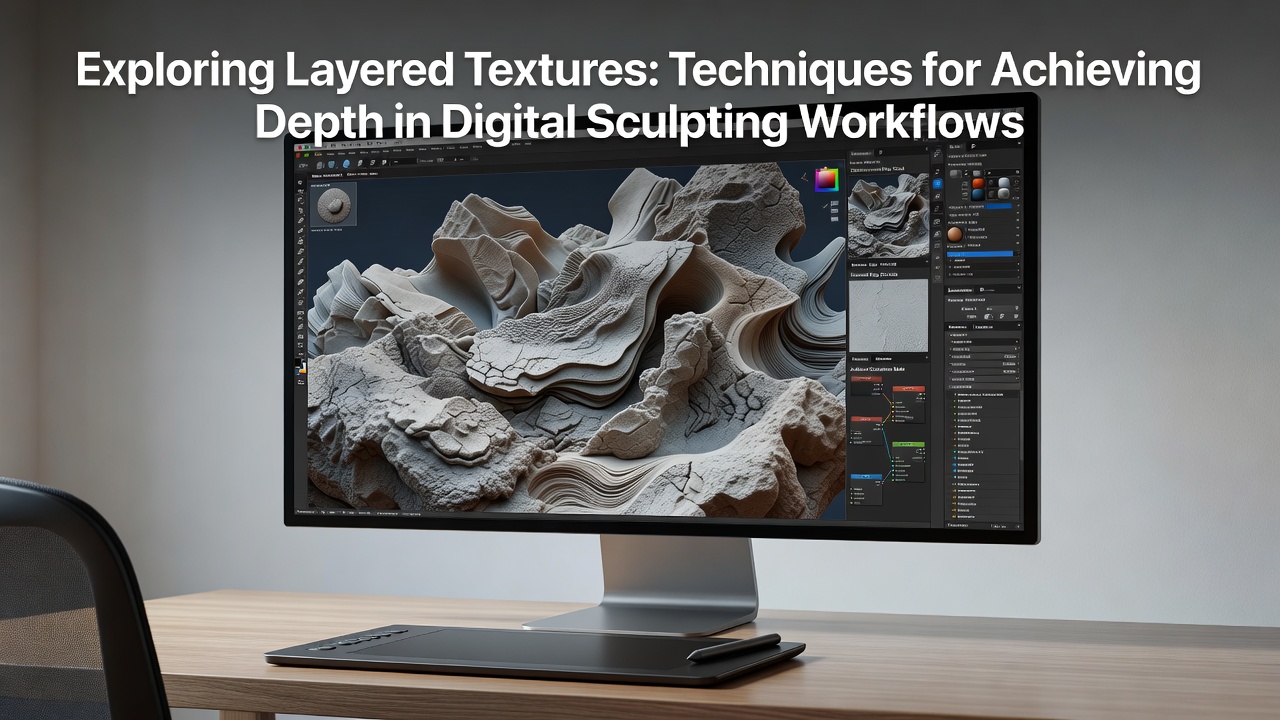
Digital sculpting relies on layered textures to build visual complexity in three-dimensional models, where artists stack displacement maps, normal maps, and albedo layers within software environments such as ZBrush and Mudbox. These layers interact through blending modes that simulate material properties ranging from rough stone to polished metal, allowing precise control over how light interacts with surface details at different scales.
Foundational Concepts Behind Layered Approaches
Layered textures function through a hierarchy of detail passes, beginning with broad forms sculpted at low subdivision levels and progressing to fine surface variations added at higher resolutions. Researchers have documented how this method reduces computational load during initial modeling stages while preserving editability, because each layer remains independent until final rendering. Data from industry reports indicate that models using five or more texture layers exhibit measurable improvements in perceived depth when viewed under dynamic lighting conditions.
Masking systems play a central role by restricting texture application to specific regions, which prevents unwanted blending between adjacent materials. Observers note that procedural masks generated from curvature maps or ambient occlusion data allow for consistent results across large asset libraries, particularly in environments where multiple artists collaborate on the same project files.
Practical Techniques for Depth Enhancement
Displacement mapping forms the base layer in most workflows, translating grayscale height information into actual geometry modifications during render time. Artists combine this with vector displacement for directional control, enabling features such as raised ridges or recessed grooves without manual vertex pushing. Studies from academic institutions show that combining 16-bit displacement with 8-bit normal maps produces depth effects that remain stable across different viewing distances.
Alpha brushes introduce organic variation by stamping repeating patterns onto selected layers, while custom alphas derived from photogrammetry scans add authenticity to natural surfaces. One documented case involved a team that achieved realistic bark textures on tree models by overlaying three alpha layers with varying scales and rotation offsets, resulting in non-repetitive detail that held up under close inspection.
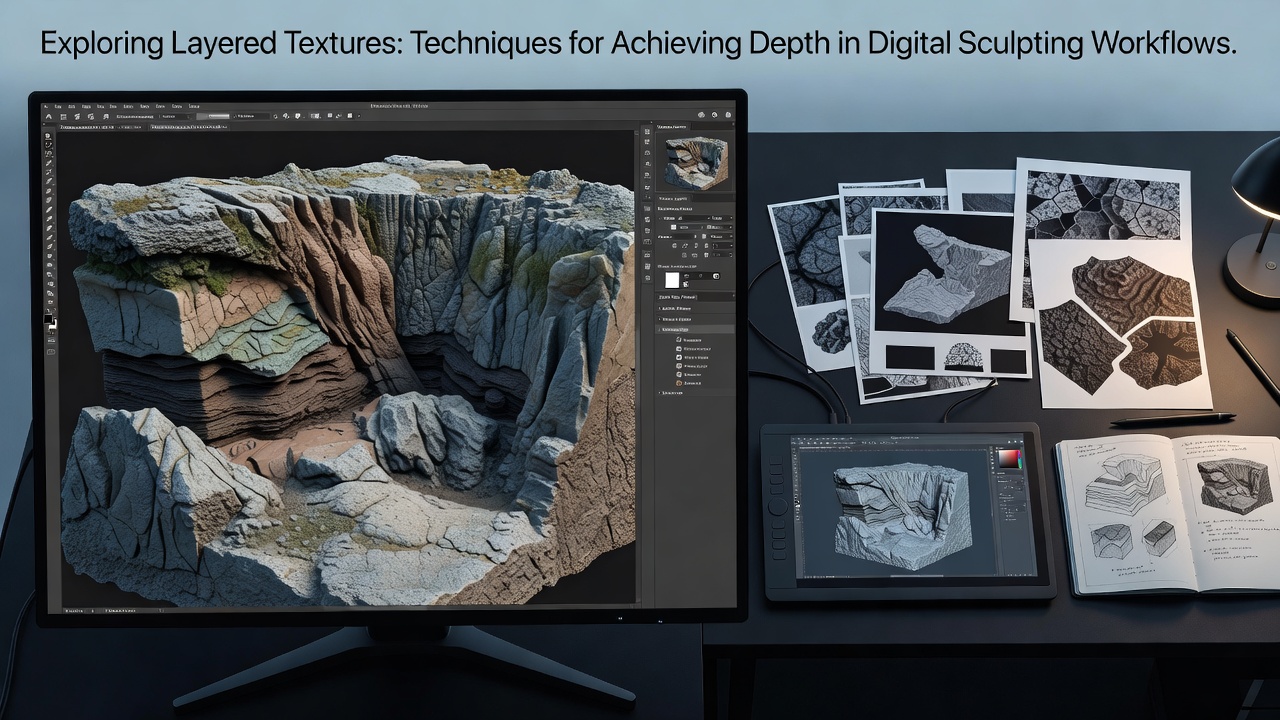
Normal map baking from high-resolution sculpts transfers fine detail to lower-poly meshes, freeing resources for additional layers such as specular or roughness maps. Those who have examined production pipelines report that baking occurs after all sculpting layers reach completion, ensuring that surface information remains accurate during the transfer process. In October 2026 several software updates introduced improved baking algorithms that handle overlapping UV islands with greater precision, reducing artifacts in layered setups.
Integration with Modern Toolsets and Workflows
Subdivision surface modeling supports layered textures by allowing dynamic level-of-detail adjustments, where lower levels handle structural depth and higher levels manage micro-surface details. Software such as Blender incorporates node-based material systems that let users stack texture layers with mathematical operations, creating complex interactions without destructive edits. Documentation from the Blender Foundation outlines how these nodes facilitate non-linear workflows that accommodate iterative refinement across multiple texture passes.
Real-time engines apply similar layering principles through shader graphs, where artists assign material slots that reference separate texture sets for albedo, metallic, and height channels. Research published by institutions in the Asia-Pacific region demonstrates that optimized layer counts improve frame rates in interactive applications while maintaining visual fidelity, especially when combined with texture streaming technologies.
Collaboration platforms now include version control for individual texture layers, enabling teams to review changes to specific depth elements without affecting base geometry. This capability proves useful in large-scale projects where specialists focus on distinct material aspects such as wear patterns or subsurface scattering.
Conclusion
Layered texture techniques continue to evolve alongside hardware capabilities and software features, providing sculptors with structured methods for constructing depth through sequential detail addition. The combination of displacement, normal, and mask layers, supported by baking and procedural tools, delivers consistent results across static and animated assets. As platforms refine their layering implementations, practitioners gain access to workflows that balance artistic control with technical efficiency in digital sculpting environments.